
-
Downside athletes are frequent on most groups
-
Constructing a relationship with the issue athlete is a key to bettering their behaviour
-
Gaining respect will assist strengthen the coach-athlete relationship
Coaches should discover a option to break via with drawback athletes.
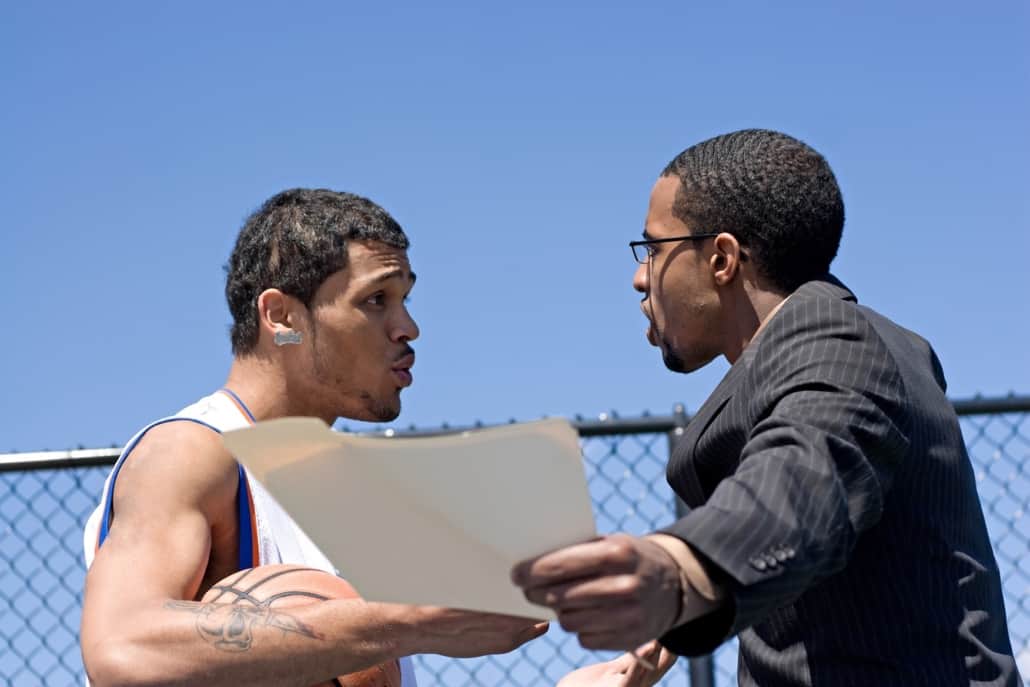
How ought to coaches finest handle drawback athletes?
Constructing sturdy relationships is a key plank of profitable teaching however is particularly vital relating to drawback athletes.
That’s the opinion of a number one power and conditioning coach, who believes coaches have to show honesty and vulnerability when coping with athletes who show problematic behaviour.
Cole Hergott — Head Energy & Conditioning Coach at Trinity Western College in Langley, BC, Canada — says coping with tough athletes is considered one of his career’s trickiest duties, however there are instruments to make issues simpler.
“Downside athletes are frequent on most groups – they pose a problem to your regular work atmosphere and it’s good to tackle it to guard workforce tradition and stop unfavourable influences,” Hergott, who has a Grasp’s Diploma in Teaching Science, stated throughout his Science for Sport presentation titled ‘Teaching Problematic Athletes.’
“An issue athlete could be somebody who’s uncoachable, self-centred, argumentative or simply somebody who is hard to take care of and may lead others astray. It’s one thing as a coach it’s good to tackle as a result of it’s our job to develop these athletes and folks. For those who don’t attempt to enhance them, they’ll pull others down.
“Analysis exhibits a powerful coach-athlete relationship can improve motivation, work ethic and optimistic mindset.”
The ‘5-10-5’ rule of workforce sports activities
Hergott highlighted what he termed the ‘5-10-5’ rule, which explains that on a squad of 20 athletes, there’ll typically be 5 who’re “excellent” and 5 who could cause points. The ten within the center could be closely influenced by their teammates both positively or negatively – therefore the necessity to ensure the center group is positively influenced.
Hergott stated coaches had to focus on their relationship with the issue athlete to enhance the state of affairs. And a coach needed to be ready to be sincere and weak.
“Present you care [about them] – for actual,” he stated. “Exhibiting you take care of actual opens the door to so many avenues relating to teaching. When athletes are cared for in a nurturing atmosphere, they’re extra prone to do what they’re advised – [that is] the essence of buy-in. Why? As a result of when somebody cares about them and has their finest curiosity in thoughts, they’re extra prone to comply with a plan and belief that particular person.
“Ask them about their day outdoors of sport, ask them about their upcoming weekend, or what’s up at college, or what sort of music they like. The simplest option to construct a powerful relationship is to spend time with them and have significant conversations. Study them. And it must be a two-way road – ensure you speak in confidence to them. Be a human, not a robotic coach who does no incorrect. You want to contribute to the connection. It does contain some vulnerability. Make it a protected place.”
It would sound apparent – however you’ve obtained to know your stuff
Gaining an athlete’s respect can be a key weapon in making an attempt to educate an issue athlete, Hergott says.
“You must know your stuff,” Hergott stated. “Step up when given an opportunity – if you happen to’re requested a query, reply it! Display your worth. However preserve it easy – if you happen to can’t clarify the idea to your grandmother, then you definately don’t understand it nicely sufficient.
“And it’s OK to say ‘I don’t know’ – being sincere and weak might help construct relationships after which you’ll be able to attempt to discover out the reply and/or discover another person who might help, which is an effective way to indicate them [the athlete] that you just care about them.”